
How to Start and Scale a Shopify Supplement Store in 2026
The supplement industry is entering a new phase of competition as more brands move online in 2026. Shopify continues to attract new sellers, but the gap between fast launches and sustainable growth is becoming more visible.
Many stores go live within days, yet only a small number manage to build trust, retain customers, and scale effectively. Understanding how the market operates now can make the difference between short-term traction and long-term success.
Why Supplement Stores Are Growing Fast in 2026
A strong shift in consumer behavior is driving supplement growth in 2026. Buyers now prioritize health, appearance, and longevity in daily life. Supplements have moved from optional purchases to routine essentials.
According to Grand View Research, the global dietary supplements market was valued at approximately USD 209.5 billion in 2025 and is projected to grow at a CAGR of 8.1% from 2026 to 2033, reaching nearly USD 394 billion by 2033. This strong expansion is fueled by rising demand for preventive healthcare and wellness products.
Meanwhile, Shopify enables faster store launches and lowers the cost of entry for new sellers. However, tighter regulations and increasing competition are raising the standard for brands across the market.
- Rising demand for health, fitness, and longevity across daily routines
- Multiple audience segments, including fitness, beauty, aging, and wellness
- Lower entry barriers through dropshipping and private label models
- Increasing regulatory pressure on labeling and product claims
- Stronger competition as more brands enter the market
Legal and Compliance Requirements You Can’t Ignore
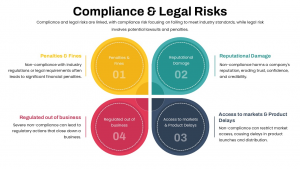
Shopify allows supplement sales, but regulators are tightening control across major markets. Authorities are placing a stronger focus on product safety, labeling accuracy, and consumer protection. As a result, legal compliance is no longer optional for supplement brands. Store owners must build their operations around clear legal standards from the start.
Core Rules Every Supplement Store Must Follow
Store owners must meet strict regulatory requirements before listing or promoting any supplement product. These rules help ensure transparency and reduce risk for both businesses and consumers.
- Follow FDA and DSHEA labeling requirements
- Provide full ingredient transparency on all product pages
- Include the required “not evaluated by the FDA” disclaimer where applicable
- Avoid misleading, exaggerated, or unverified health claims
Payment and Product Restrictions
Payment providers are applying stricter policies to supplement businesses. Certain ingredients or product categories may trigger additional review or rejection. Shopify supports supplement stores, but payment gateways may classify them as high-risk. Store owners should verify product eligibility before scaling traffic or running ads.
International Compliance Requirements
Global expansion introduces more complex legal requirements. Each country enforces its own rules on ingredients, labeling, and health claims. Sellers must adapt product information and packaging to meet local standards. Otherwise, shipments may face delays, penalties, or rejection at customs.
Guide to Start a Shopify Supplement Store
Years of working with supplement brands have shown a clear pattern in how successful stores get built. Shopify offers a flexible foundation, but results depend on how each step is executed. Based on real client experience, the most effective stores focus on structure early, align with compliance from day one, and build trust before scaling.
Choose a Profitable Niche
New sellers often struggle when they try to cover too many categories. A focused niche helps define the brand and attract the right audience. Common segments include weight loss, gut health, collagen, and men’s performance.
Moreover, validation is essential before launch. Demand and competition data help identify real opportunities and avoid crowded markets.
Pick a Business Model
Business models shape how stores operate and scale. Dropshipping lowers upfront costs, private label builds brand control, and wholesale supports faster setup. Each model serves a different strategy.
However, compliance still applies across all models. Sellers must verify product standards before listing or promoting items.
Find Reliable Suppliers
Supplier quality directly affects product safety and brand trust. Reliable partners provide GMP certification and COA documentation to ensure consistency.
At the same time, transparent sourcing builds credibility. Low-quality suppliers often lead to unstable products and higher return rates.
Build Your Shopify Store
Store design plays a key role in customer trust. Clean layouts and clear product information improve user confidence in health-related purchases.
As a result, product pages should include ingredients, usage instructions, and disclaimers. Mobile-first design also ensures a smoother experience.
While Shopify’s pre-built themes are great for getting started, many successful supplement brands partner with a dedicated Shopify development agency to customize their storefronts. Expert Village Media, a verified Shopify Select Partner with 14+ years of experience and 2,000+ stores built, specializes in creating high-performing supplement stores that align with brand identity and drive conversions. Their Shopify SEO services ensure your store ranks for supplement-related keywords from day one, giving you a competitive edge in a crowded market.
Set Up Payments and Policies
Payment setup requires careful handling in the supplement niche. Some gateways apply stricter rules due to risk classification.
Meanwhile, clear policies help reduce disputes. Refund terms, shipping details, and conditions should remain visible and easy to understand.
Top Shopify Supplement Stores to Watch
We ranked these supplement stores using data from trusted sources such as ECDB and Similarweb. We also reviewed public business information to compare brand scale, visibility, and overall market presence.
Huel
Huel builds its store around a clear nutrition-first message, with strong emphasis on complete meals and daily use. The brand combines education, product clarity, and repeat purchase logic to support long-term customer value.
Main strengths:
- Clear positioning around complete nutrition
- Strong educational content across product pages
- Subscription-friendly product structure
- Clean and focused storefront design
Revenue in 2025: around $114 million in annual online sales.

Liquid I.V.
Liquid I.V. presents hydration supplements with a polished storefront and strong product messaging. The brand uses bundles, subscriptions, and benefit-driven content to guide users through the buying journey.
Main strengths:
- Clear product categories and navigation
- Strong bundle and subscription strategy
- Benefit-focused messaging and education
- High-converting product pages
Revenue in 2025: over $1 billion in annual retail sales
Optimum Nutrition
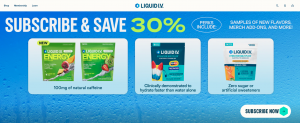
Optimum Nutrition leans on a performance-driven storefront with a strong focus on sports nutrition and product trust. Instead of overloading the page, the brand keeps navigation clear, highlights category intent early, and makes it easier for shoppers to move from discovery to purchase.
Main strengths:
- Clear supplement categories and product hierarchy
- Strong trust signals around performance nutrition
- Focused storefront that supports faster product discovery
- Product pages built for direct purchase intent
Revenue in 2025: around $33 million in annual online sales.

Onnit
A broader lifestyle angle gives Onnit a different storefront feel. The brand mixes supplements with fitness and wellness positioning, which helps it appeal to shoppers looking for more than a single product type.
Main strengths:
- Strong brand identity across wellness and performance
- Lifestyle-focused messaging that supports wider appeal
- Clean navigation across multiple product segments
- Product pages designed to support cross-sell opportunities
Revenue in 2025: around $33 million in annual online sales.

BUBS Naturals
BUBS Naturals takes a clean and minimal approach, with a storefront that focuses on product benefits and everyday usability. The brand keeps messaging simple and highlights ingredients and use cases early to support faster decisions.
Main strengths:
- Clean and minimal product page design
- Strong focus on ingredient transparency
- Clear benefit-led messaging
- Easy-to-navigate product structure
Revenue in 2025: around $12 million in annual online sales.

Shopify Apps That Support Supplement Stores
Store owners must balance compliance with growth in the supplement space. Small gaps in setup can quickly affect trust and conversion. Moreover, the right app stack helps remove those friction points and creates a more stable foundation.
Blockify Age Verification 18+
Supplement stores often need to restrict access to certain products based on age. Age verification tools help reduce compliance risks and prevent underage access.
Blockify Age Verification allows merchants to control entry with customizable rules and flexible verification methods. The app works across store pages and supports different compliance scenarios.
Main features:
- Custom age verification popup (18+, 21+, or custom age)
- Date of birth input or simple Yes/No verification
- Apply restrictions to entire store or specific pages
- Terms & Conditions checkbox integration
- Fully responsive on mobile devices

Recharge Subscriptions
Recurring orders drive consistent revenue in the supplement industry. Subscription tools help automate repeat purchases and improve customer retention.
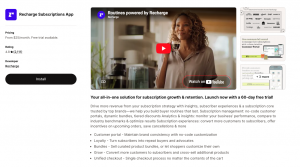
Merchants can streamline this process with platforms like Recharge Subscriptions, which support flexible billing cycles and customer self-management. The system allows stores to build predictable revenue while giving users more control over their plans.
Main features:
- Flexible subscription plans (weekly, monthly, custom)
- Customer self-management portal
- Automated recurring billing
- Subscription analytics and reporting
- Integration with major payment gateways
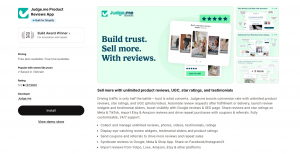
Judge.me Product Reviews
Customer trust plays a central role in supplement purchases. Review apps help display social proof and reduce hesitation during decision-making.
Judge.me Product Reviews collects and showcases verified customer feedback across product pages. The app supports high-volume review collection without slowing down store performance.
Main features:
- Unlimited review collection with photo and video support
- Automated review request emails
- Verified buyer badges for credibility
- Fast loading with lightweight design
Klaviyo Email Marketing & SMS
Customer retention plays a key role in supplement stores, especially when products rely on repeat purchases and long-term usage. Email and SMS marketing tools help brands stay connected with customers and drive consistent engagement.
Klaviyo allows merchants to build targeted campaigns based on customer behavior and purchase history. The platform supports automation and personalization, which helps supplement stores increase repeat orders and customer lifetime value.
Main features:
- Email and SMS automation flows
- Advanced customer segmentation
- Behavior-based targeting and personalization
- Pre-built templates for campaigns and popups
- Detailed analytics and performance tracking

Omega Facebook Pixel Meta Feed
Accurate tracking becomes critical for supplement stores running paid ads. Data loss or misconfigured events can directly affect campaign performance and attribution.
This setup becomes easier to manage with tools like Omega Facebook Pixel & Conversion API, which help merchants send event data through both browser and server-side tracking. As a result, stores can improve signal quality and support better optimization for Meta campaigns.
Main features:
- One-click Facebook Pixel integration
- Conversion API support for server-side tracking
- Event tracking for purchase, add to cart, and checkout
- Built-in event deduplication
- Easy setup without complex coding

How to Scale Your Shopify Supplement Business
Supplement brands must move beyond early traction to grow sustainably. Long-term success depends on retention, branding, and consistent performance optimization.
Build a Strong Brand
Many stores fail to stand out when they focus only on products. A strong brand creates a clear identity that customers can recognize and trust.
In addition, packaging and storytelling shape how customers perceive value. Consistent visuals and messaging help build long-term loyalty.
Launch Subscription Models
Subscription models create stable and predictable revenue streams. Customers in the supplement space often prefer routine purchases over one-time orders.
As a result, subscriptions increase lifetime value and improve retention. Stores can scale more efficiently with recurring income.
Expand Product Lines
Product expansion allows brands to capture more value from existing customers. Cross-selling related products helps increase average order value.
For example, stores often combine vitamins with protein or pair beauty supplements with wellness products. This approach builds a more complete offering.
Optimize Conversion Rate (CRO)
Conversion rate optimization plays a key role in scaling revenue. Small improvements can lead to significant gains over time.
Moreover, A/B testing helps identify what works best on product pages. Strong trust signals such as reviews, certifications, and lab results also improve purchase confidence.
Go International
Global expansion opens access to larger markets and new customer segments. However, each region requires careful adaptation.
Store owners must adjust labels, follow local regulations, and manage shipping logistics. Proper localization helps avoid compliance issues and improves customer experience.
So, What’s Next?
Shopify supplement stores offer strong growth potential, but they also demand a higher level of responsibility from day one. Brands that succeed treat compliance and trust as the foundation, not an afterthought.
In practice, growth comes from consistent marketing and retention, not one-time wins. Start lean, validate quickly, and scale with a clear strategy once the foundation is in place.