

In this fast-moving digital world, my role as a marketer has never been more diverse and interesting. Technology has become a powerful way to reach 21st-century audiences effectively and conveniently, instead of knocking on doors as businesses have been doing for centuries. One of the key transformative technologies driving this change is AI systems. As we prepare to enter 2026, being aware of the best AI digital marketing trends isn’t just something good to know; it is absolutely critical for any business that wants to grow on the internet..
Understanding AI Digital Marketing
What is digital marketing?
Digital marketing is selling or promoting your goods or services through electronic means. While conventional advertising appears in print, on television, or on the radio, digital marketing reaches potential customers online. It includes tactics like SEO, social media ads, email marketing, content marketing, and paid online advertising.
The main benefit of digital marketing is that you can target your audience with accuracy, track performance immediately, and adjust strategies based on real data. This is what has made it an essential element of modern business success.
Why Digital Marketing is Important
Digital marketing helps expand your reach by allowing people across the world to access your business. It is also affordable, usually more cost-effective than traditional advertising, and offers better returns on investment. Marketers can monitor results in real time using analytics tools. Digital marketing also improves engagement through social media, emails, and personalized content. Early adopters of digital marketing often stay ahead of competitors in customer acquisition.
As digital marketing continues to evolve, artificial intelligence is transforming how brands work by giving them the ability to analyze customer behavior, make strategic decisions, and handle repetitive tasks efficiently.
Understanding AI in Digital Marketing
Artificial Intelligence (AI) is the study of computer systems that can perform functions that typically require human intelligence. This includes problem-solving, data analysis, pattern learning, and even content creation, often discussed in the context of artificial intelligence vs human intelligence and how both differ in learning and decision-making.
AI is used in digital marketing to streamline processes, improve customer service, and extract insights from data. It’s no longer a far-off idea, it’s here, transforming how marketers understand and engage with their audience.
Top AI Trends in Digital Marketing
AI-Powered Content Creation
Content remains the king in digital marketing. AI is now being used to create quality content for various purposes, blog posts, social media, ads, and email campaigns. Tools like ChatGPT, Jasper AI, and Copy.ai enable marketers to generate personalized and relevant content with ease. Many brands are also strengthening their content strategy by working with UGC creators from the UK to produce authentic, region-specific content that feels more relatable and builds trust with local audiences.
In 2026, AI-created content will grow more advanced, helping marketers quickly produce SEO-optimized articles, create engaging social media posts using a social media post maker based on audience interests, generate campaign visuals with an AI image generator, and automate email campaigns based on online activity
Predictive Analytics for Customer Behavior
AI-based predictive analytics uses AI to analyze historical data and predict future outcomes. This trend is becoming essential for marketers who want to understand customer needs before they even arise.
It helps in predicting what products a customer is likely to buy, personalizing recommendations to boost sales, and reducing churn by identifying potential dissatisfaction. Predictive analytics is already used in tools like HubSpot, Salesforce Einstein, and Google Analytics 4.
Chatbots and Conversational AI
Customer engagement is evolving. AI chatbots such as Drift, ManyChat, and Intercom provide instant assistance and guidance to users 24/7.
In 2026, conversational AI will handle complex queries more naturally, offer personalized shopping experiences, and automate lead capture processes. Brands who create chatbots will be able to provide round-the-clock support without increased operational costs.
AI-powered conversational solutions are helping businesses automate customer interactions, improve response times, and streamline support processes. Industry-specific AI agents, such as a dental AI receptionist, are becoming increasingly popular for managing patient enquiries and appointment scheduling.
Voice Search Optimization
With smart speakers and voice assistants like Alexa, Siri, and Google Assistant becoming common, voice search is transforming how users find information. AI processes natural language and delivers accurate answers, making voice-optimized content essential.
Businesses must start using conversational keywords, structuring content like Q&A, and focusing on local SEO for “near me” searches.
Visual and Video Recognition
AI-driven visual recognition is disrupting content marketing. Platforms can now analyze images and videos to identify objects, emotions, and user preferences.
This technology enables personalized product recommendations, better ad targeting using visual cues, and automated tagging and labeling of videos. Beyond analysis, AI-powered editing tools now allow marketers to enhance visual content effortlessly, including the ability to remove objects from photos that may distract from the main message or brand aesthetic. Marketers can also use an AI poster to quickly transform campaign ideas into polished visual assets that match their messaging and brand identity. This streamlines the content creation process and ensures that every image used in campaigns is polished and on-brand. Tools like Canva AI, Runway ML, and Lumen5 are already empowering marketers with visual AI.
Hyper-Personalization
Customers today expect brands to understand what they want. AI enables hyper-personalization by analyzing browsing history, location, and past engagement patterns.
This helps businesses send personalized emails with product recommendations, show dynamic website content tailored to each visitor, and offer dynamic pricing based on user behavior. By 2026, hyper-personalization will be a requirement, not a luxury.
Programmatic Advertising
AI-powered programmatic advertising automates the buying and targeting of ads using machine learning to display ads to the right audience at the right time.
This reduces ad spend wastage, optimizes campaigns in real time, and improves ROI. Companies like The Trade Desk, Google Display & Video 360, and AdRoll already use AI to place smarter ads.
AI-Powered SEO
Search engines are constantly evolving, and AI helps marketers adapt. AI tools analyze search trends, keyword patterns, and content performance to improve SEO strategies. These tools can also automate SEO competitor analysis, identifying exactly which gaps in your rivals’ strategies you can exploit for higher rankings.
They help identify trending topics, optimize headline structure and meta tags, and predict algorithm changes to maintain rankings. Platforms like SEMRush, Ahrefs, and Surfer SEO include AI features that give marketers an advantage.
Scaling With AI in Digital Marketing
To get the most out of AI, marketers must invest in tools like ChatGPT, Jasper AI, HubSpot, or Salesforce Einstein. AI needs accurate data, so strong data collection is essential. AI should support your marketing strategy, not replace it. While AI can automate and optimize, human monitoring is crucial for refining campaigns. Marketers must also train their teams to understand AI better and maximize its benefits.
Popular Digital Marketing Tools
With digital marketing advancing rapidly, AI-driven tools enable automation, intelligent content creation, and predictive analytics. These tools help marketers and businesses manage content, CRM, and chat automation more efficiently.
1. Jasper AI

Jasper AI is an AI-driven content creation platform designed for marketing teams. It helps generate blogs, ads, emails, and social media content while maintaining brand tone and consistency.
Features
- Long-form content creation
- Multiple marketing templates
- Brand voice customization
- SEO-friendly content recommendations
- Collaboration tools for teams
Pros & Cons
| Pros | Cons |
| Helps scale content quickly | Pricing may be high for solo creators |
| Maintains brand consistency | Still requires human editing |
| Saves time on ideation | Dependent on strong prompts |
| Useful for agencies and teams |
Pricing
- Creator Plan: ~$49/month
- Pro Plan: ~$69/month
- Business: Custom pricing
2. HubSpot Marketing Hub
HubSpot Marketing Hub is a powerful CRM and automation platform that uses AI to improve email personalization, analyze customer data, score leads, and manage campaigns.
Features
- CRM and contact management
- Email automation
- AI-powered personalizations
- Lead scoring and segmentation
- Multi-channel campaign management
- Advanced analytics and reporting
Pros & Cons
| Pros | Cons |
| All-in-one platform | Advanced plans are expensive |
| Excellent automation features | Learning curve for beginners |
| Strong analytics | Costs increase with contact volume |
| Free tier available |
Pricing
- Free plan: $0
- Starter: ~$15/month
- Professional: ~$800/month
- Enterprise: ~$3600/month
3. ManyChat
ManyChat is an AI-enabled chatbot builder for Instagram, Facebook, WhatsApp, and websites. It helps automate conversations, generate leads, and support customers with minimal effort.
Features
- Drag-and-drop chatbot builder
- Automated chat flows
- Multi-platform messaging
- Contact tagging and segmentation
- Integrations with CRMs and email systems
Pros & Cons
| Pros | Cons |
| Very easy to use | Limited features in the free plan |
| Free plan available | Pricing increases with more contacts |
| Great for lead generation | Advanced flows require setup time |
| Works across multiple messaging apps |
Pricing
- Free: $0
- Pro: Starting at ~$15/month
- Enterprise: Custom pricing
4. SearchPie
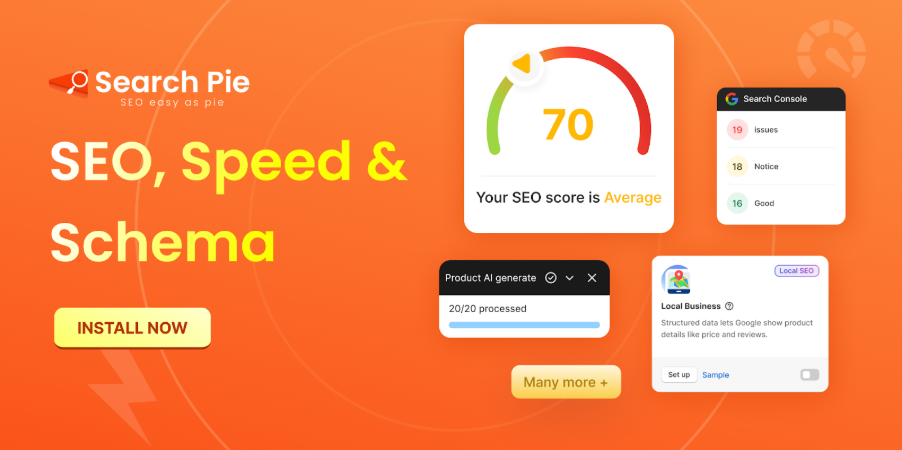
SearchPie is an all-in-one SEO and speed toolkit built for Shopify. It uses automation and AI to fix on-page issues, add rich schema, speed up pages, and surface insights that help your products rank and convert faster!
Features
- Get higher rankings with schema & sitemaps for richer Google results.
- Speed up pages with image compression to hit mobile Core Web Vitals.
- Boost CTR with AI-generated title, description & ALT text for all your products.
- Fix crawl issues with auto-fix URL, indexing check via real-time alerts.
- Resolve warnings on Google Search Console, Shopping Feed and Business Profile.
Pros & Cons
| Pros | Cons |
| Quick setup | Advanced features may need guidance |
| Strong automation (AI tags, schema) | Costs scale with store size/needs |
| Speed tools bundled (AMP, compression) | Learning curve for total beginners |
| Certified “Built for Shopify” |
Pricing
- Starter: Free
- Premium: $39
- Enterprise: $99
Conclusion
Digital marketing today is about creating experiences, not just connections. As we enter 2026, AI is reshaping every part of digital marketing, from content creation and SEO to personalization and predictive analytics. Businesses that adopt AI trends early will gain an advantage through smarter campaigns, better spending, and stronger customer relationships. When creative AI combines with thoughtful planning, marketers can achieve meaningful digital growth.
Staying ahead requires following trends closely, experimenting with AI tools, and continuously evolving with the digital landscape. AI is not the future of digital marketing, it is the present, and ignoring it in 2026 may leave businesses behind.